

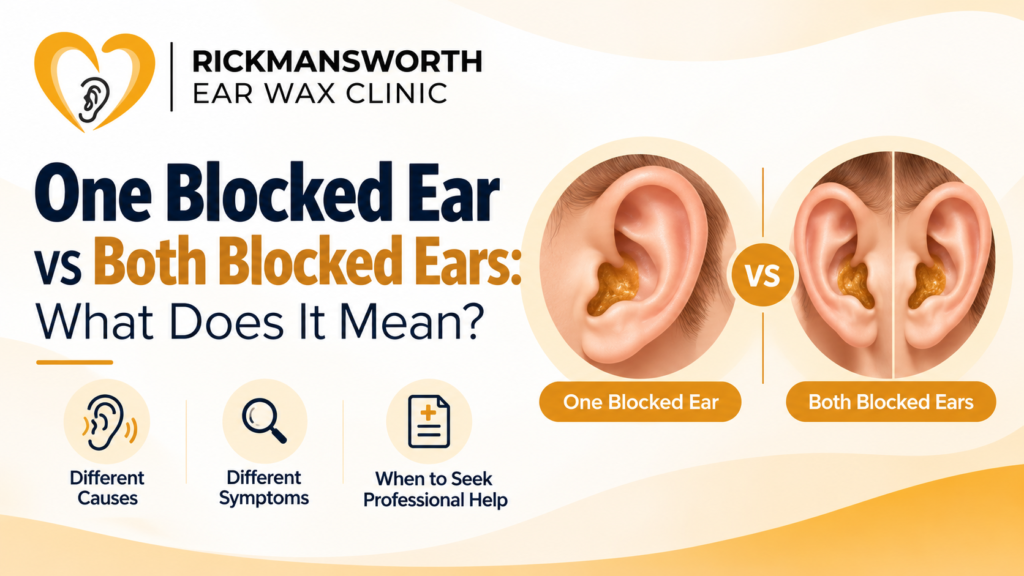
Quick Answer
A blocked ear may result from earwax, infection, congestion or pressure changes. One blocked ear often points to an issue affecting that ear alone, while both blocked ears may occur with wax, colds, allergies or Eustachian tube problems. However, sudden hearing loss always needs urgent medical assessment.
Introduction
A blocked ear can make sounds seem muffled and create an uncomfortable feeling of pressure or fullness. You may also notice itching, ringing or reduced hearing.
But does it matter whether one ear is blocked or both ears are blocked? The pattern can provide useful clues, although it cannot confirm the exact cause by itself.
At Rickmansworth Earwax Clinic, a clinician can examine your ears to check whether earwax is causing the problem and whether professional removal is appropriate.
Key Takeaways
- One blocked ear may result from earwax, trapped water or another local ear problem.
- Both blocked ears may occur with wax, congestion, allergies or pressure changes.
- Earwax can cause muffled hearing, fullness, itching and tinnitus.
- Cotton buds may push wax deeper into the ear canal.
- An ear examination can confirm whether wax is present.
- Sudden hearing loss requires urgent medical attention.
What Does One Blocked Ear Usually Mean?
One blocked ear often suggests that something is affecting that particular ear.
Earwax is one of the most common causes. However, wax does not always build up equally in both ears. One ear canal may be narrower, produce more wax or become blocked sooner than the other.
Other possible causes include trapped water, an ear infection, local irritation or pressure problems. For example, water may remain in the ear after swimming or showering and create a temporary blocked sensation.
If the blockage develops gradually and you also notice muffled hearing, itching or fullness, earwax may be responsible. Therefore, an ear examination can help confirm the cause before you try treatment.
What Does It Mean When Both Ears Feel Blocked?
Both blocked ears can occur because of congestion, pressure changes or earwax affecting both ear canals.
Colds and allergies can cause swelling around the Eustachian tubes. These tubes help regulate pressure between the middle ear and the back of the nose. As a result, congestion may make both ears feel full, muffled or pressurised.
Earwax can also affect both ears. In addition, people who regularly use hearing aids, earbuds or earplugs may experience recurring wax build-up.
Flying and rapid altitude changes can temporarily block both ears too. In this situation, pressure changes rather than earwax may be responsible.
One Blocked Ear vs Both Blocked Ears
The pattern of your symptoms may provide useful clues.
Symptom Pattern | Possible Cause |
One blocked ear | Earwax, trapped water, infection |
Both blocked ears | Wax, congestion, allergies |
Blocked ear with itching | Earwax or irritation |
Blocked ear after flying | Pressure changes |
Blocked ear with ringing | Earwax or another ear condition |
Sudden hearing loss | Needs urgent medical assessment |
However, several ear problems can produce similar symptoms. For this reason, persistent blockage may need professional assessment.
Could Earwax Be Causing Your Blocked Ear?
Yes. Earwax is a common cause of blocked ears and muffled hearing.
Earwax normally protects the ear canal and gradually moves towards the outer ear. Sometimes, however, too much wax collects inside the canal and becomes impacted.
Several factors can increase the chance of earwax build-up. These include narrow ear canals, naturally hard wax, hearing-aid use and frequent use of earbuds or earplugs.
Cotton buds can make the problem worse. Instead of removing wax, they may push it deeper into the canal. For this reason, avoid inserting objects into your ears when they feel blocked.
What Are the Common Symptoms of Earwax Build-Up?
Earwax blockage usually causes gradual symptoms rather than a sudden major change in hearing.
Common symptoms include:
- Muffled or reduced hearing
- A blocked or full feeling
- Itching inside the ear
- Earache or discomfort
- Ringing or buzzing
- A plugged-ear sensation
- Mild dizziness in some people
These symptoms may affect one ear or both ears. However, other ear conditions can cause similar problems, so an examination can help identify whether wax is actually responsible.
When Should a Blocked Ear Be Checked Urgently?
Do not assume sudden hearing loss is caused by earwax.
Seek urgent medical advice if you experience:
- Sudden hearing loss in one or both ears
- Hearing that becomes worse quickly
- Severe ear pain
- Fluid or discharge from the ear
- Bleeding
- Significant dizziness
- High temperature with ear symptoms
If your hearing changes suddenly, contact your GP or NHS 111. Instead of waiting for routine earwax treatment, seek prompt assessment because some causes of hearing loss need urgent attention.
Should You Try to Remove Earwax Yourself?
Avoid putting objects inside your ear canal to clear a blockage.
Cotton buds, ear picks, hairpins and similar objects may push wax deeper or irritate the delicate skin inside the ear. Therefore, home cleaning can sometimes make the problem worse.
A pharmacist may recommend ear-softening drops for some people. However, these products are not suitable for everyone, especially people with certain ear conditions, previous ear surgery or a suspected perforated eardrum.
If you are unsure what is causing the blockage, arrange an ear examination before trying to remove the wax yourself.
Ear Care Tip: Clean only the visible outer part of your ear. Avoid inserting anything into the ear canal.
Microsuction vs Home Ear Cleaning
Professional microsuction allows a clinician to remove wax while viewing the ear canal directly.
Before treatment, the clinician checks your ears to confirm that wax is actually causing the blockage. If removal is appropriate, microsuction uses controlled suction to clear the wax without flushing water into the ear.
By contrast, home cleaning often involves trying to remove wax without seeing exactly what is inside the ear canal. Cotton buds and other objects may push the wax deeper and increase irritation.
For this reason, professional assessment can be a safer option when blocked-ear symptoms continue.
What Happens at Rickmansworth Earwax Clinic?
The clinician checks your ears before recommending wax-removal treatment.
A typical appointment may include:
- Discussing your symptoms and ear history.
- Examining the ear canal and eardrum.
- Checking whether earwax is causing the blockage.
- Removing wax with microsuction when appropriate.
- Providing ear-care and aftercare advice.
This assessment-first approach helps identify the cause rather than assuming that every blocked ear contains wax.
Rickmansworth Earwax Clinic
3 Tudor Way, Berry Lane
Rickmansworth
WD3 4DF
What Are Common Misconceptions About Blocked Ears?
A blocked feeling does not always mean that earwax is responsible.
One common misconception is that every blocked ear needs wax removal. However, congestion, infection and pressure changes can create very similar symptoms.
Another misconception is that wax cannot block both ears. In reality, earwax may accumulate in one ear or both ears at the same time.
Some people also use cotton buds because they believe this keeps their ears clean. Instead, cotton buds can push wax deeper into the canal and contribute to impaction.
Most importantly, never dismiss sudden hearing loss as ordinary earwax. Seek urgent medical advice if your hearing changes suddenly.
How Can You Reduce Recurrent Earwax Problems?
Good ear care means allowing your ears to clean themselves naturally whenever possible.
To reduce recurring wax problems:
- Clean only the visible outer part of the ear.
- Avoid putting cotton buds inside the ear canal.
- Have repeated blockage professionally checked.
- Follow professional advice about ear-softening products.
- Consider regular checks if you use hearing aids and frequently develop wax.
In addition, avoid repeatedly trying to remove wax yourself because this may push it deeper into the ear canal.
Why Do Hearing Aids and Earbuds Sometimes Contribute to Blocked Ears?
Devices worn inside the ear can interfere with the natural movement of earwax.
Normally, wax gradually works its way towards the outside of the ear. However, hearing aids, earplugs and in-ear headphones may sometimes prevent this movement.
As a result, some people who regularly use these devices experience repeated wax build-up.
If you wear hearing aids and frequently notice muffled hearing or blocked ears, periodic professional checks may help identify excess wax before it becomes uncomfortable.
Can Flying Cause One or Both Ears to Feel Blocked?
Yes. Changes in air pressure can temporarily make one or both ears feel blocked.
During take-off and particularly during landing, pressure changes around the eardrum. Your Eustachian tubes help equalise this pressure.
However, if the tubes do not open quickly enough, your ears may feel full, muffled or uncomfortable.
Swallowing, yawning or chewing can sometimes help equalise pressure. On the other hand, if blocked hearing continues after your flight, another cause such as earwax or congestion may need consideration.
Can a Cold Make Your Ears Feel Blocked?
Yes. A cold can cause temporary ear blockage by affecting the Eustachian tubes.
When you have a cold, swelling and mucus around the nose and throat can make it harder for these tubes to regulate pressure.
Consequently, one or both ears may feel:
- Full
- Pressurised
- Muffled
- Popping or clicking
These symptoms often improve as the cold settles. However, persistent symptoms, severe pain or significant hearing changes should receive appropriate medical assessment.
When Should You Book an Ear Check?
Consider an ear check when blocked or muffled hearing continues, keeps returning or affects your daily activities.
If symptoms develop gradually, earwax may be one possible cause. A professional examination can confirm whether wax is present and whether removal would help.
An ear check can also be useful if:
- Your ears frequently become blocked.
- Hearing aids are not working as well as usual.
- You experience recurring wax build-up.
- Ear drops have not improved the problem.
- You are unsure whether the blockage is wax or something else.
However, sudden hearing loss needs urgent medical assessment rather than a routine wax-removal appointment.
People Also Ask
Why is only one of my ears blocked?
One-sided blockage may result from earwax, trapped water, infection or another problem affecting that individual ear.
Why do both ears feel blocked?
Both ears can feel blocked because of wax, congestion, allergies or pressure changes.
How do I know if my ear is blocked with wax?
Earwax may cause fullness, itching, muffled hearing and ringing. However, an ear examination provides the best way to confirm it.
Can earwax block only one ear?
Yes. Wax commonly builds up at different rates in each ear.
Can blocked ears cause tinnitus?
Yes. Earwax and other ear conditions can sometimes cause ringing or buzzing.
Should I use cotton buds for blocked ears?
No. Cotton buds may push wax deeper into the ear canal and make the blockage worse.
Conclusion
Whether one ear is blocked or both ears are blocked, several different conditions can create the same uncomfortable sensation.
Earwax is a common and treatable cause. However, congestion, pressure changes, infection and other ear problems can also make hearing feel muffled or blocked. For this reason, it is better to identify the cause before attempting treatment.
If your symptoms develop gradually and you suspect earwax, Rickmansworth Earwax Clinic can examine your ears and provide microsuction when appropriate.
However, seek urgent medical advice if you experience sudden hearing loss, severe pain, discharge, bleeding or rapidly worsening symptoms.
If blocked or muffled ears continue to bother you, contact Rickmansworth Earwax Clinic to arrange a professional ear assessment.
FAQs
Can both ears become blocked with wax?
Yes. Earwax can build up in one or both ears.
Can a cold make my ears feel blocked?
Yes. Congestion can affect the Eustachian tubes and make both ears feel full.
Can flying cause blocked ears?
Yes. Changes in air pressure can temporarily block the ears.
Can hearing aids increase wax build-up?
They may contribute to earwax accumulation in some people.
Is microsuction suitable for every blocked ear?
No. The ear should first be examined to confirm that wax is present.
Does microsuction use water?
No. Microsuction uses controlled suction under visual guidance.
When is a blocked ear urgent?
Sudden hearing loss, severe pain, bleeding or discharge should be assessed promptly.
Where can I get earwax removal in Rickmansworth?
Rickmansworth Earwax Clinic provides ear examinations and microsuction where appropriate.
