

Quick Answer
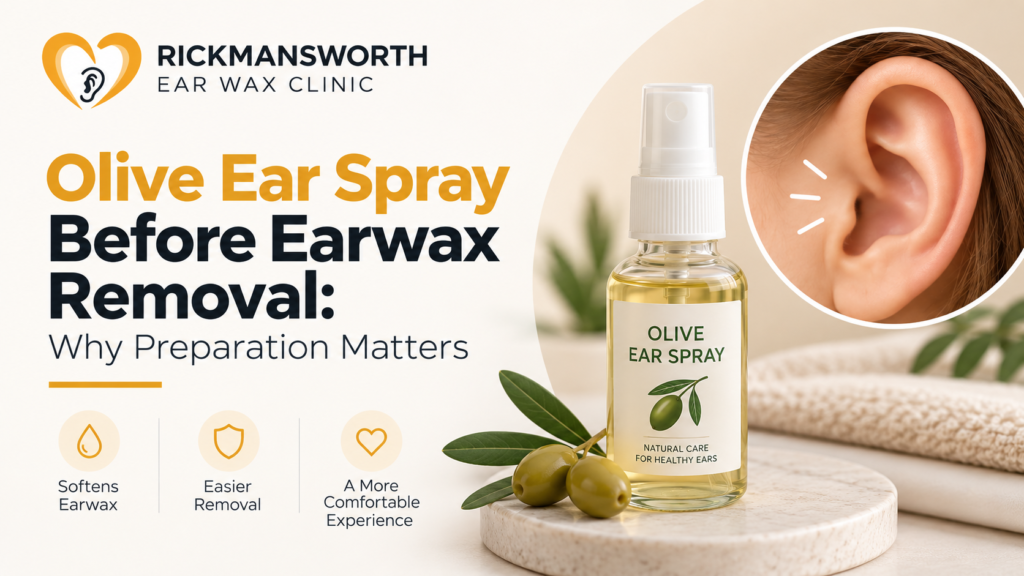
Olive ear spray before earwax removal may help soften hard or dry wax, making treatment smoother and more comfortable. Rickmansworth Earwax Clinic recommends using olive ear spray for around five days before treatment where suitable. Do not use ear products if you have pain, discharge or known eardrum problems unless advised.
Introduction
Olive ear spray before earwax removal is often recommended because earwax can become hard, dry or impacted. When wax is very firm, removal may take longer or may not be suitable straight away.
Preparation matters because professional earwax removal should be safe, controlled and comfortable. At Rickmansworth Earwax Clinic, patients are advised to prepare before treatment where appropriate and have their ears assessed before removal begins.
For general guidance, you can also read the NHS page on earwax build-up.
Key Takeaways
- Olive ear spray may help soften earwax before removal.
- Softer wax can make treatment smoother and more comfortable.
- Rickmansworth Earwax Clinic suggests olive ear spray for five days before treatment.
- Ear examination is still needed before wax removal.
- Do not use cotton buds, fingers or objects inside the ear.
- Avoid ear drops or sprays if you have pain, discharge or eardrum concerns unless advised.
- Book professional help if blocked ears, muffled hearing or fullness continue.
What Is Olive Ear Spray?
Olive ear spray is an earwax-softening product used to help loosen hard or dry wax.
It usually contains olive oil in a spray format. The aim is not to force wax out, but to soften it so it can move more naturally or be removed more easily during a professional appointment.
Olive ear spray is different from treatment such as microsuction. It is a preparation step, not a complete earwax removal method for every case.
Why Use Olive Ear Spray Before Earwax Removal?
Olive ear spray before earwax removal may make hard wax softer and easier to manage.
When wax is dry or compacted, it can be more difficult to remove comfortably. Softening the wax in advance may help reduce resistance during treatment and support a smoother appointment.
Rickmansworth Earwax Clinic explains its consultation process and recommends applying olive ear spray before treatment to help soften wax.
How Long Should You Use Olive Ear Spray?
Rickmansworth Earwax Clinic suggests using olive ear spray for around five days before treatment.
Follow the product instructions or the advice given by the clinic. Do not overuse ear products or mix different ear drops unless a healthcare professional advises you to do so.
If symptoms worsen, stop and seek advice.
Olive Ear Spray vs No Preparation
Preparation can make a difference, especially when wax is hard or impacted.
Option | Best For | Possible Outcome |
Olive ear spray before treatment | Hard, dry or compacted wax | May support smoother removal |
No preparation | Softer or mild wax | May still be suitable after assessment |
Cotton buds | Not recommended | Can push wax deeper |
Ear candles | Not recommended | Risk of irritation or injury |
Professional assessment | All blocked-ear symptoms | Confirms safest next step |
The safest approach is to prepare as advised and let the clinician check the ear before treatment.
When Should You Not Use Olive Ear Spray?
Do not use olive ear spray without advice if you have pain, discharge, bleeding or known eardrum problems.
You should also ask for medical advice if you have sudden hearing loss, severe dizziness, recent ear surgery, an ear infection or a history of perforated eardrum.
Ear symptoms are not always caused by wax. A professional examination helps confirm whether earwax removal is appropriate.
What Symptoms Suggest Earwax Build-Up?
Earwax build-up may cause blocked ears, muffled hearing, fullness, ringing, itching or discomfort.
Some people also notice symptoms more after using hearing aids, earbuds or earplugs. Wax can build up gradually, so hearing changes may feel sudden even when the blockage has developed over time.
You can read more about related symptoms on the clinic’s guide to ear fullness, ringing or pain.
What Happens During the Appointment?
The appointment starts with an ear examination before removal is considered.
A typical visit may include:
- Symptom and medical history review
- Ear canal inspection
- Explanation of findings
- Wax removal if suitable
- Aftercare advice
If wax is too hard, too deep or not safe to remove immediately, the clinician may advise more softening and a follow-up appointment instead of forcing the procedure.
What Common Mistakes Should You Avoid?
The biggest mistake is trying to remove wax yourself with objects.
Cotton buds, hair clips, ear picks and home camera tools can push wax deeper or irritate the ear canal. Ear candles are also not a safe solution.
Another mistake is using ear spray when symptoms suggest infection or injury. If you have pain, discharge or bleeding, get advice first.
How Can Rickmansworth Earwax Clinic Help?
Rickmansworth Earwax Clinic can assess your ears and advise whether olive ear spray preparation is suitable before removal.
The clinic offers ear assessment, microsuction where appropriate and aftercare advice for patients in Rickmansworth and nearby areas. Patients can use the appointment form or contact Rickmansworth Earwax Clinic for support.
Rickmansworth Earwax Clinic is located at:
3 Tudor Way, Berry Lane
Rickmansworth
WD3 4DF
Patients who find clinic visits difficult may also ask about the at-home earwax removal service.
Common Misconceptions
One common misconception is that olive ear spray removes all earwax by itself. It may soften wax, but some blockages still need professional removal.
Another myth is that more spray gives faster results. Overusing products can irritate the ear, so it is better to follow instructions.
Some people also think cotton buds are useful after spraying. They are not recommended because they can push softened wax deeper.
People Also Ask
Should I use olive ear spray before earwax removal?
Yes, it may be recommended to soften wax before treatment, but only where suitable for your ear health.
How many days before earwax removal should I use olive ear spray?
Rickmansworth Earwax Clinic suggests using olive ear spray for around five days before treatment.
Does olive ear spray remove earwax completely?
Sometimes it may help soften wax, but impacted wax may still need professional removal.
Can I use cotton buds after olive ear spray?
No. Cotton buds can push wax deeper and make blockage worse.
Where can I get earwax removal in Rickmansworth?
Rickmansworth Earwax Clinic provides professional earwax assessment and removal support.
Conclusion
Olive ear spray before earwax removal can be a useful preparation step because it may soften hard wax and support smoother treatment. It should be used correctly and only when suitable.
Rickmansworth Earwax Clinic can examine your ears, explain whether wax removal is appropriate and provide safe treatment advice for patients in Rickmansworth and nearby areas.
Medical notice: This article provides general ear-health information and does not replace an individual ear examination or medical diagnosis.
FAQs
Is olive ear spray safe?
It may be suitable for many people, but avoid it if you have pain, discharge, bleeding or eardrum concerns unless advised.
Can olive ear spray make hearing feel worse?
Sometimes softened wax can temporarily make the ear feel more blocked before treatment.
Is olive ear spray the same as ear drops?
It has a similar wax-softening purpose, but the application format is different.
Do I still need an ear check?
Yes. Ear examination is needed before deciding whether wax removal is suitable.
Can I use olive ear spray with hearing aids?
Use it carefully and follow advice, as oil residue may affect hearing aid use if not managed properly.
What if the wax is still too hard?
The clinician may recommend further softening and another appointment.
Is microsuction possible without preparation?
Sometimes yes, but preparation may help when wax is hard, dry or impacted.
How do I book an appointment?
Use the Rickmansworth Earwax Clinic appointment form or contact the clinic directly.
