
Quick Answer
Video otoscopy is a camera-based ear examination that helps clinicians view the ear canal and eardrum before earwax removal. It is used to confirm whether wax is present, check if treatment is suitable, reduce guesswork and explain findings clearly to the patient before microsuction or other ear care advice.
Introduction
Video otoscopy is useful because blocked ears are not always caused by earwax. Muffled hearing, fullness, itching, ringing or discomfort may feel like wax, but the ear should be checked properly before treatment.
At Rickmansworth Earwax Clinic, the consultation process starts with an ear examination before deciding the safest removal method. This helps patients understand what is happening inside the ear and why professional assessment matters.
For general earwax guidance, you can also read the NHS page on earwax build-up.
Key Takeaways
- Video otoscopy gives a clearer view of the ear canal.
- It helps confirm whether earwax is actually present.
- It can support safer treatment planning before removal.
- It helps identify when wax removal may not be suitable.
- It allows patients to better understand their ear condition.
- Cotton buds should not be used inside the ear canal.
- Rickmansworth Earwax Clinic uses ear assessment before treatment.
What Is Video Otoscopy?
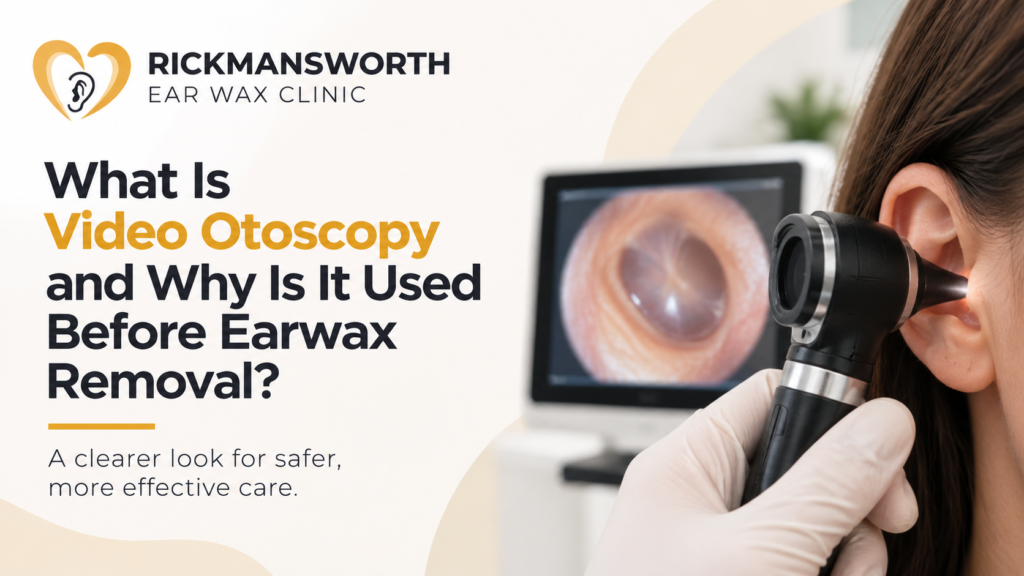
Video otoscopy is an ear examination using a small camera-based otoscope.
A video otoscope allows the clinician to view the ear canal on a screen. This can help check for wax build-up, irritation, narrowing, blockage or signs that another healthcare route may be needed.
It is not a treatment by itself. It is an assessment step used before deciding whether earwax removal is safe and appropriate.
Why Is Video Otoscopy Used Before Earwax Removal?
Video otoscopy is used before earwax removal because treatment should not start without checking the ear first.
A blocked ear may be caused by wax, but it may also be linked to infection, inflammation, fluid, injury or another ear concern. Looking inside the ear helps the clinician decide whether microsuction, softening advice or medical referral is the better next step.
This makes the appointment more accurate and patient-focused.
What Can Video Otoscopy Help Identify?
Video otoscopy can help identify wax build-up and whether the ear looks suitable for removal.
It may help the clinician see if the wax is soft, hard, deep, dry, wet or close to the eardrum. It may also show whether the canal looks irritated or too sensitive for immediate removal.
If the ear does not look suitable for treatment, the clinician can explain why and advise a safer next step.
Video Otoscopy vs Traditional Otoscopy
Video otoscopy and traditional otoscopy both help examine the ear, but video otoscopy can make findings easier to see and explain.
Feature | Traditional Otoscopy | Video Otoscopy |
View | Clinician views directly | Camera view may appear on screen |
Patient understanding | Patient relies on explanation | Findings may be easier to explain visually |
Use before removal | Checks ear canal | Checks ear canal with clearer visual support |
Treatment planning | Helps guide next step | Helps support clearer decision-making |
Best use | Basic examination | Detailed patient-friendly assessment |
Both methods should be used by trained professionals who know when treatment is suitable and when medical advice is needed.
What Happens During a Video Otoscopy Check?
During video otoscopy, the clinician gently examines the ear canal using an otoscope.
A typical appointment may include:
- Asking about symptoms and medical history.
- Checking whether you have pain, discharge or previous ear surgery.
- Looking inside the ear canal.
- Explaining whether wax is present.
- Advising whether removal is suitable.
- Discussing microsuction, preparation or aftercare.
Rickmansworth Earwax Clinic explains its consultation process before treatment, including assessment, explanation, removal where suitable and aftercare guidance.
Does Video Otoscopy Make Earwax Removal Safer?
Video otoscopy can support safer earwax removal by improving assessment before treatment.
The main safety benefit is not the camera alone. The benefit comes from combining clear visibility with trained clinical judgement, suitable equipment and proper consent.
If wax is too hard or difficult to remove, the clinician may recommend softening first. Rickmansworth Earwax Clinic suggests olive ear spray before treatment to help soften wax and make removal smoother.
When Should You Book an Ear Examination?
Book an ear examination when symptoms affect hearing, comfort or daily life.
Common reasons include blocked ears, muffled hearing, ear fullness, ringing, itching or repeated wax build-up. Hearing aid users may also need checks if their hearing aids whistle, sound unclear or feel blocked.
You should seek medical advice urgently if you have sudden hearing loss, severe pain, discharge, bleeding, dizziness, fever or recent ear injury.
What Mistakes Should Patients Avoid?
The biggest mistake is trying to remove wax blindly at home.
Cotton buds, hair clips, ear candles, camera tools and home scoops can push wax deeper or irritate the ear canal. Even if you can see wax, it does not mean it is safe to remove at home.
Only clean the visible outer ear. For deeper blockage, book a professional ear check.
How Can Rickmansworth Earwax Clinic Help?
Rickmansworth Earwax Clinic can assess blocked ears and recommend suitable earwax removal where appropriate.
The clinic provides ear checks, treatment explanation, microsuction where suitable and aftercare guidance. Patients can use the appointment form or contact Rickmansworth Earwax Clinic for support.
The clinic is located at:
3 Tudor Way, Berry Lane
Rickmansworth
WD3 4DF
Common Misconceptions
One common misconception is that every blocked ear needs wax removal. Some blocked-ear symptoms may have another cause, so examination comes first.
Another myth is that video otoscopy means patients can safely clean their ears at home using camera tools. Professional ear assessment is different because it involves training, safe technique and clinical judgement.
Some people also think microsuction can be done without checking the ear first. A proper ear examination helps confirm whether treatment is suitable.
People Also Ask
What is video otoscopy?
Video otoscopy is a camera-based ear examination used to view the ear canal and eardrum.
Why is video otoscopy used before earwax removal?
It helps confirm whether wax is present and whether removal is suitable.
Is video otoscopy painful?
No. It is usually a quick visual examination of the ear canal.
Can video otoscopy show impacted earwax?
Yes. It can help show whether wax is blocking the ear canal.
Where can I get an ear check in Rickmansworth?
Rickmansworth Earwax Clinic offers professional ear checks and wax removal support.
Conclusion
Video otoscopy is a useful first step before earwax removal because it helps confirm what is happening inside the ear. It supports safer decision-making, clearer patient explanation and more suitable treatment planning.
Rickmansworth Earwax Clinic provides professional ear assessment, microsuction where suitable and aftercare advice for patients in Rickmansworth and nearby areas.
Medical notice: This article provides general ear-health information and does not replace an individual ear examination or medical diagnosis.
FAQs
Is video otoscopy the same as microsuction?
No. Video otoscopy is an examination. Microsuction is a wax removal method.
Does everyone need video otoscopy before earwax removal?
An ear examination should be done before removal to check suitability.
Can video otoscopy diagnose all ear problems?
No. It helps with visual assessment, but some symptoms may need GP or specialist review.
Can I remove wax if I see it with a home camera?
No. Seeing wax does not mean it is safe to remove it yourself.
What symptoms suggest earwax build-up?
Muffled hearing, blocked ears, earache, fullness, tinnitus or dizziness may occur.
Should I use cotton buds before my appointment?
No. Cotton buds can push wax deeper and make blockage worse.
What if the wax is too hard to remove?
The clinician may recommend wax softening first and rebook treatment if needed.
How do I book an appointment?
Use the Rickmansworth Earwax Clinic appointment form or contact the clinic directly.
