

Clear ears, clear hearing—trust the professionals, not risky DIY fixes.
Sudden hearing loss can be alarming. One moment conversations sound normal, and the next voices feel distant, muffled, or completely blocked on one side. Many people immediately fear permanent hearing damage, inner ear disease, or neurological problems. However, one of the most common — and fortunately reversible — causes of sudden hearing changes is impacted earwax. At Rickmansworth Earwax Clinic, a significant number of patients attend after experiencing abrupt hearing reduction, only to discover that compacted wax is the root cause.
Earwax, medically known as cerumen, plays an important protective role. It traps dust, bacteria, and debris while keeping the ear canal moisturised. Normally, it moves outward naturally and falls away without notice. In some individuals, however, this self-cleaning process fails. Wax may harden, accumulate, or become pushed deeper into the ear canal, especially through cotton bud use, hearing aids, earphones, or natural anatomical differences. When this happens, sound waves cannot travel efficiently to the eardrum, leading to sudden or progressive hearing loss.
For residents of Rickmansworth, understanding when earwax is the cause — and when professional help is needed — can prevent unnecessary worry and reduce the risk of complications caused by unsafe DIY removal attempts.
Can Earwax Really Cause Sudden Hearing Loss?
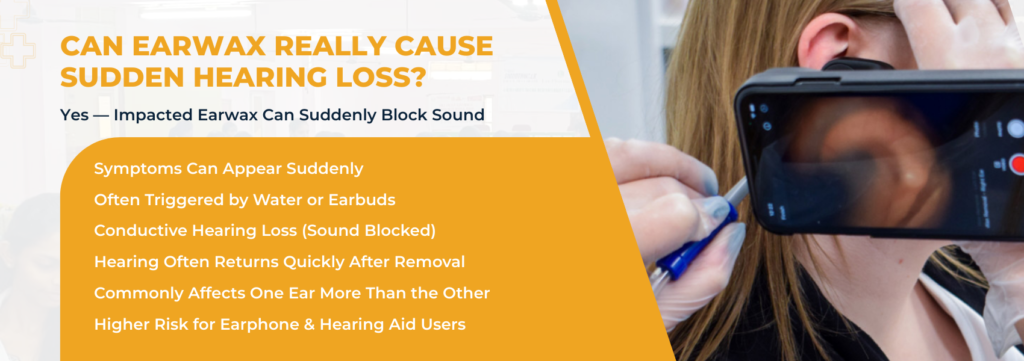
Although earwax buildup often develops gradually, symptoms can appear suddenly. This usually happens when wax shifts position, becomes compacted after water exposure, or finally blocks the ear canal completely. Many patients report waking up with sudden hearing loss or noticing it immediately after showering, swimming, or using earbuds.
Unlike sensorineural hearing loss, which involves the inner ear or auditory nerve, hearing loss caused by earwax is conductive. This means sound is physically blocked from reaching the eardrum. The good news is that once the obstruction is safely removed, hearing often returns instantly or within hours.
Sudden hearing loss from earwax can affect:
- One ear more than the other
- People who regularly use earphones or hearing aids
- Older adults whose wax becomes drier and harder
- Individuals with narrow or curved ear canals
At Rickmansworth Earwax Clinic, many patients are relieved to learn that their hearing loss is temporary and fully reversible with professional removal.
Key Signs Earwax Is Causing Your Hearing Loss
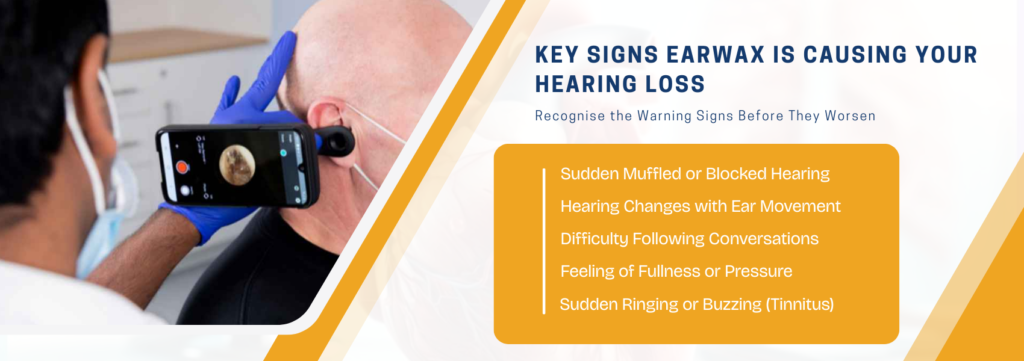
Recognising the symptoms of earwax-related hearing loss is essential. While some signs are obvious, others are subtle and easy to dismiss until they worsen. Hearing changes linked to wax buildup often develop alongside physical sensations within the ear.
Common warning signs include:
• A sudden muffled or blocked feeling in one or both ears
• Hearing that improves temporarily when you tug your ear or yawn
• Difficulty following conversations, especially in noisy settings
• A sensation of fullness or pressure inside the ear
• Ringing or buzzing sounds (tinnitus) that appeared suddenly
• Mild dizziness or imbalance without other neurological symptoms
If these symptoms appear abruptly and there is no pain, infection, or recent illness, impacted earwax is a likely cause. Attempting to clear the blockage yourself can worsen the situation by pushing wax deeper or damaging the ear canal.
Sudden silence doesn’t always mean permanent damage — sometimes it’s simply wax in the wrong place.
Why DIY Earwax Removal Can Make Hearing Worse
When hearing suddenly drops, many people instinctively reach for cotton buds, hairpins, tissues, or over-the-counter kits. While these methods may seem harmless, they are the leading cause of worsened impaction and ear injuries seen in clinics.
The ear canal is narrow, curved, and sensitive. Without visibility, any object inserted into the ear risks compacting wax against the eardrum or scraping delicate skin. Even ear drops, when used incorrectly, can cause wax to swell and further block hearing.
Problems commonly caused by DIY removal include:
- Wax being pushed deeper and becoming harder to remove
- Small cuts or abrasions leading to infection
- Increased tinnitus after irritation of the ear canal
- Perforation of the eardrum in severe cases
At Rickmansworth Earwax Clinic, many patients attend after DIY attempts have failed, often experiencing worse hearing than before.
Trying to fix hearing loss blindly can turn a simple blockage into a painful problem.
How Professional Earwax Removal Restores Hearing Safely
Professional earwax removal replaces guesswork with precision. Clinicians use visual tools such as endoscopes or otoscopes to clearly see inside the ear canal before choosing the safest removal method. This ensures wax is removed efficiently without harming the ear.
At Rickmansworth Earwax Clinic, modern techniques such as microsuction and endoscopic earwax removal are used. These methods do not rely on water pressure and are suitable for patients with sensitive ears, previous ear surgery, or perforation history.
Benefits of professional removal include:
✔ Immediate improvement in hearing
✔ Minimal discomfort
✔ Reduced risk of infection or injury
✔ Safe for children, adults, and older patients
✔ No guesswork — everything is done under direct vision
Most patients experience noticeable hearing restoration within minutes of wax removal.
What Happens During an Earwax Removal Appointment?
Understanding what to expect can ease anxiety, especially for those experiencing sudden hearing loss. Appointments are calm, structured, and designed to prioritise comfort.
A typical appointment includes:
- Clinical history and symptom review
- Visual examination of the ear canal
- Explanation of findings and treatment plan
- Gentle wax removal using microsuction or endoscopy
- Final ear check and aftercare advice
Appointments usually last 20–30 minutes, and many patients report instant clarity and improved sound perception once the blockage is removed.
Restoring hearing can be as simple as removing what doesn’t belong in the ear.
When Sudden Hearing Loss Needs Urgent Attention
While earwax is a common cause of sudden hearing loss, not all hearing changes should be assumed to be wax-related. Certain symptoms require urgent medical assessment.
Seek immediate medical care if hearing loss is accompanied by:
• Severe ear pain
• Sudden hearing loss with dizziness or vomiting
• Facial weakness or numbness
• Fever or discharge from the ear
• Hearing loss following head trauma
If hearing loss is painless, gradual or sudden, and linked with fullness or blockage, professional earwax assessment at Rickmansworth Earwax Clinic is an appropriate first step.
When Sudden Hearing Loss Needs Urgent Attention
While earwax is a common cause of sudden hearing loss, not all hearing changes should be assumed to be wax-related. Certain symptoms require urgent medical assessment.
Seek immediate medical care if hearing loss is accompanied by:
• Severe ear pain
• Sudden hearing loss with dizziness or vomiting
• Facial weakness or numbness
• Fever or discharge from the ear
• Hearing loss following head trauma
If hearing loss is painless, gradual or sudden, and linked with fullness or blockage, professional earwax assessment at Rickmansworth Earwax Clinic is an appropriate first step.
Preventing Future Earwax-Related Hearing Loss
Once hearing is restored, prevention becomes important. Some people naturally produce more earwax and may need regular monitoring to avoid recurrence.
Helpful prevention tips include:
• Avoid inserting cotton buds or objects into the ear
• Limit prolonged earphone use when possible
• Have regular ear checks if you use hearing aids
• Follow clinician advice on softening drops if recommended
• Schedule routine reviews if you are prone to buildup
Preventive care is especially useful for residents in Rickmansworth who want to avoid repeat episodes of sudden hearing loss.
Why Choose Rickmansworth Earwax Clinic?
At Rickmansworth Earwax Clinic, patient safety, clarity, and comfort are central to every appointment. The clinic offers both in-clinic and at-home services, using modern, evidence-based techniques tailored to individual needs.
Patients value:
✔ Experienced clinicians
✔ Advanced microsuction and endoscopic equipment
✔ Calm, unrushed appointments
✔ Clear explanations and honest advice
✔ Convenient access for Rickmansworth residents
Whether hearing loss appeared suddenly or gradually, professional assessment ensures the correct cause is identified and treated safely.
Conclusion
Sudden hearing loss can be frightening, but it is often reversible when earwax is the cause. Impacted wax can block sound abruptly, creating the sensation of hearing disappearing overnight. The key is avoiding unsafe DIY solutions and seeking professional care. At Rickmansworth Earwax Clinic, expert assessment and modern removal techniques restore hearing safely, comfortably, and efficiently. If your hearing has changed suddenly, a simple ear check could make all the difference.

