

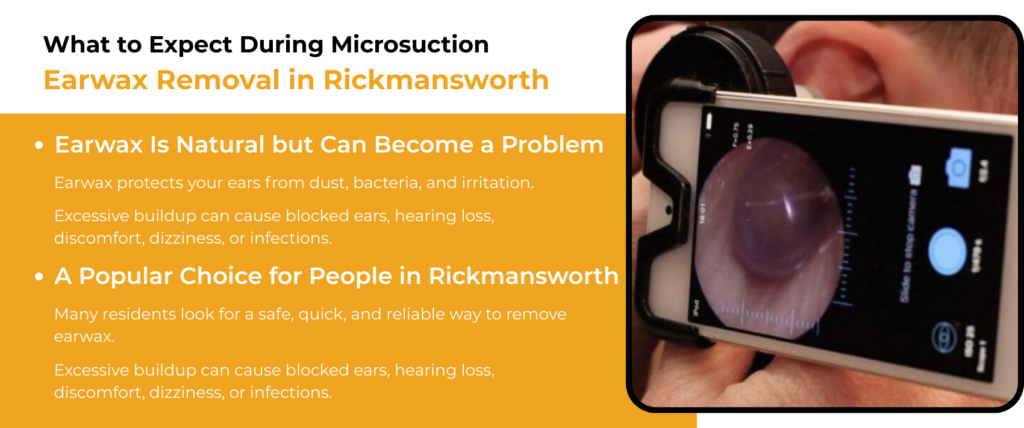
Earwax is natural and essential—it protects your ears from dust, bacteria, and irritation. But too much earwax can quickly become a problem, leading to blocked ears, hearing loss, discomfort, dizziness, or ear infections. Many people living in or near Rickmansworth look for a safe, quick, and reliable way to clear blocked ears, and this is where microsuction earwax removal becomes the preferred choice.
If you’ve never had the procedure before, you might wonder what actually happens during microsuction. How long does it take? Does it hurt? Is it safe for children? What should you expect afterwards? This in-depth guide will answer all your questions and walk you through every stage of the microsuction process—from your first consultation to aftercare.
What Is Microsuction Earwax Removal?
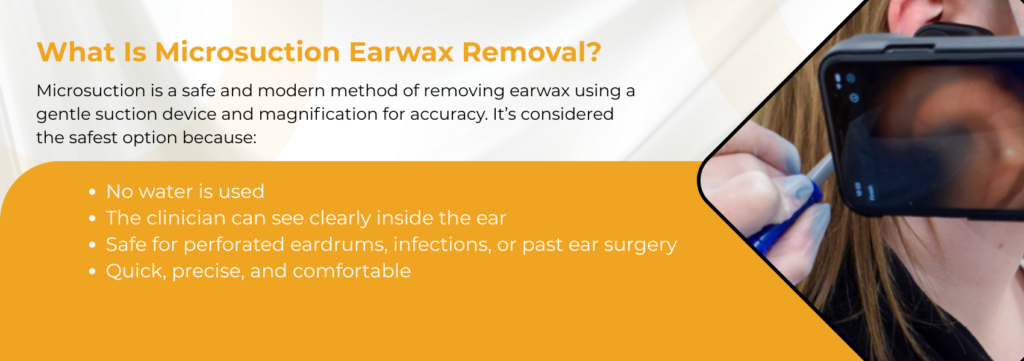
Microsuction is a modern, highly effective method of removing excess earwax using a gentle suction device and a microscope for magnification. It is widely considered the safest earwax removal method available today because:
- It does not use water (unlike ear syringing or irrigation)
- The specialist can see exactly what they are doing
- It is suitable for people with ear conditions, perforated eardrums, infections, or previous ear surgery
- It is quick and comfortable
During the procedure, a trained ear-care clinician uses a tiny suction tube to gently remove the earwax while looking into your ear with a microscope or loupe. This allows for precise, controlled wax removal.
Why Do People in Rickmansworth Choose Microsuction?
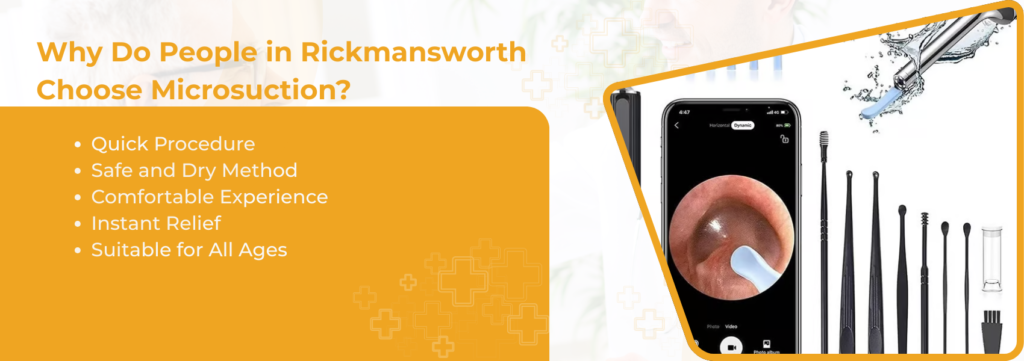
Microsuction has become the go-to method for blocked ears because it offers several advantages:
1. It’s Quick: The entire procedure typically takes 15–30 minutes, including consultation.
2. It’s Safe: Most methods use water, which can introduce bacteria or cause ear irritation. Microsuction is dry, making it safer for patients with a history of:
- Perforated eardrum
- Chronic infections
- Narrow ear canals
- Ear surgery in the past
3. It’s Comfortable: Although you may hear suction noises, the procedure is generally painless.
4. Instant Results: You usually leave the appointment with:
- Clearer hearing
- Less pressure in the ears
- Better balance
5. Suitable for All Ages: Microsuction is safe for adults, children, and the elderly
Signs You May Need Microsuction Earwax Removal
You may benefit from microsuction if you experience:
- Sudden or gradual hearing loss
- Fullness or pressure
- Itching or discomfort
- Ringing in the ears (tinnitus)
- Dizziness or imbalance
- Earache
- Difficulty using earphones or hearing aids
If left untreated, impacted earwax can worsen symptoms and even lead to infections.
What Happens During Microsuction Earwax Removal in Rickmansworth?
You may benefit from microsuction if you experience:
- Sudden or gradual hearing loss
- Fullness or pressure
- Itching or discomfort
- Ringing in the ears (tinnitus)
- Dizziness or imbalance
- Earache
- Difficulty using earphones or hearing aids
If left untreated, impacted earwax can worsen symptoms and even lead to infections.
2. Preparing for the Procedure
Most patients do not need any special prep. However, your clinician may recommend using olive oil ear drops before your appointment only if the wax is extremely hard. Softening the wax can occasionally make removal smoother, though microsuction can usually remove even firm wax without pre-treatment.
You will sit comfortably in a chair, and the clinician will position either a microscope or head-mounted magnifying loupe with a bright light to clearly see the entire ear canal.
3. The Microsuction Procedure Begins
Once you’re ready, the clinician gently inserts a small suction tube into your ear canal. The suction device looks similar to a tiny vacuum cleaner but with precision control. It is designed to:
- Remove wax without touching the ear canal
- Avoid pushing wax deeper
- Prevent damage to the eardrum
- Give the clinician full visibility at all times
You may hear a “whooshing” or “suctioning” sound—this is totally normal
4. Removing the Wax Safely
The clinician will carefully move the suction tube around the wax to break it down and lift it out. Depending on the wax consistency, they may also use additional sterile tools such as:
- A curette (small loop-shaped tool) for stubborn wax
- A fine probe to gently lift wax
- A jobson horn for manual removal
Throughout the process, they watch every movement on the magnified display or through their loupe, ensuring the procedure stays safe and comfortable. If both ears are blocked, the process is repeated on the other side.
5. After the Wax Is Removed
Once your ears are clear, your clinician will re-examine your ear canal to ensure:
- All wax has been removed
- There is no inflammation
- The eardrum looks healthy
They will discuss aftercare, offer helpful advice, and let you know whether future maintenance treatments may be beneficial.
Does Microsuction Hurt?
Microsuction is not painful for most people. You may experience:
- Slight tickling
- Mild pressure
- A sensation of pulling
- Temporary noise discomfort
If your ear canal is inflamed before the procedure, you may feel mild sensitivity—but the procedure is still safe.
Who Should Avoid Microsuction?
Microsuction is one of the safest methods available, but in very rare cases it may not be recommended. For example:
- If you have an active perforation with infection
- If your ear canal is extremely narrow and visibility is limited
- If there are foreign objects in the ear
- If you are experiencing sudden unexplained hearing loss
Your clinician will always check this before treatment.
Benefits of Microsuction Compared to Irrigation or Syringing
Before microsuction became popular, ear syringing was the most common method. Syringing uses water to flush out wax, but it carries risks such as:
- Infection
- Eardrum perforation
- Vertigo
- Water trapped in the canal
- Pain or discomfort
Microsuction avoids these issues.
It is the recommended method by:
- Audiologists
- ENT specialists
- Private hearing clinics
- UK healthcare guidelines
Is Microsuction Suitable for People with Hearing Aids?
Before microsuction became popular, ear syringing was the most common method. Syringing uses water to flush out wax, but it carries risks such as:
- Infection
- Eardrum perforation
- Vertigo
- Water trapped in the canal
- Pain or discomfort
Microsuction avoids these issues.
It is the recommended method by:
- Audiologists
- ENT specialists
- Private hearing clinics
- UK healthcare guidelines
How Long Does the Procedure Take?
The procedure usually takes:
- 5–10 minutes per ear
- Up to 20–30 minutes including consultation
For children or complex cases, it may take slightly longer.
Aftercare: What to Expect
Most patients feel immediate relief. After the procedure:
You may notice:
- Clearer hearing
- Reduced pressure
- Better balance
- Less tinnitus
Avoid for 24 hours:
- Swimming
- Earphones
- Using cotton buds
- Getting water in the ear
If you notice mild sensitivity, this usually settles within a few hours.
How Often Should You Get Microsuction Earwax Removal?
Frequency depends on the individual. Most people benefit from:
- Every 6–12 months if they naturally produce more wax
- Every 3–6 months if they wear hearing aids
- Occasional visits if wax is not a frequent issue
Your specialist will guide you based on your ear health.
Can Children Have Microsuction?
Yes, microsuction is safe for children when performed by trained ear-care professionals. It is often recommended for kids because syringing is not suitable for young ears.
Frequently Asked Questions
Is microsuction safe?
Does it damage the eardrum?
Is it normal to feel dizzy afterwards?
Do I need to use drops before the appointment?
Can I drive after microsuction?
Final Thoughts
Microsuction earwax removal is the safest, most effective, and most comfortable way to clear blocked ears. If you’re in or around Rickmansworth and experiencing hearing loss, pressure, discomfort, or tinnitus, microsuction can provide immediate relief and long-term ear health benefits.
Understanding exactly what happens during the procedure helps eliminate fear or uncertainty—and ensures you feel confident and prepared for your appointment. The process is quick, gentle, and medically trusted, making it the best option for both adults and children.
